
An indoor plan for adults that is not a table
Indoor activities for adults in Mississauga mostly come down to somewhere to sit. Cube Challenges is the other kind: thirty challenge rooms on Unity Drive, each one a short game your team plays with its hands, feet, memory and nerve, and a live leaderboard keeping score. Rain, snow or a Tuesday evening, the plan does not change.
A team is two to six people. Every player wears an RFID wristband, the team shares one score, and you choose the order of the rooms. At each door you pick one of three difficulty levels. Clear the room and the points go on the board; miss it and you can scan back in and try again.
What an adult session looks like
The same thirty rooms that a family plays at level one, an adult team plays at level three. That is the whole difference, and it is a big one: clearing a harder level scores more, so the leaderboard rewards the team that goes back to a room and raises the stakes rather than the team that clears the most easy ones.
Ninety minutes suits adults better than sixty for exactly that reason. The first pass is for finding out which rooms your team is good at. The rest is for replaying them a level up.
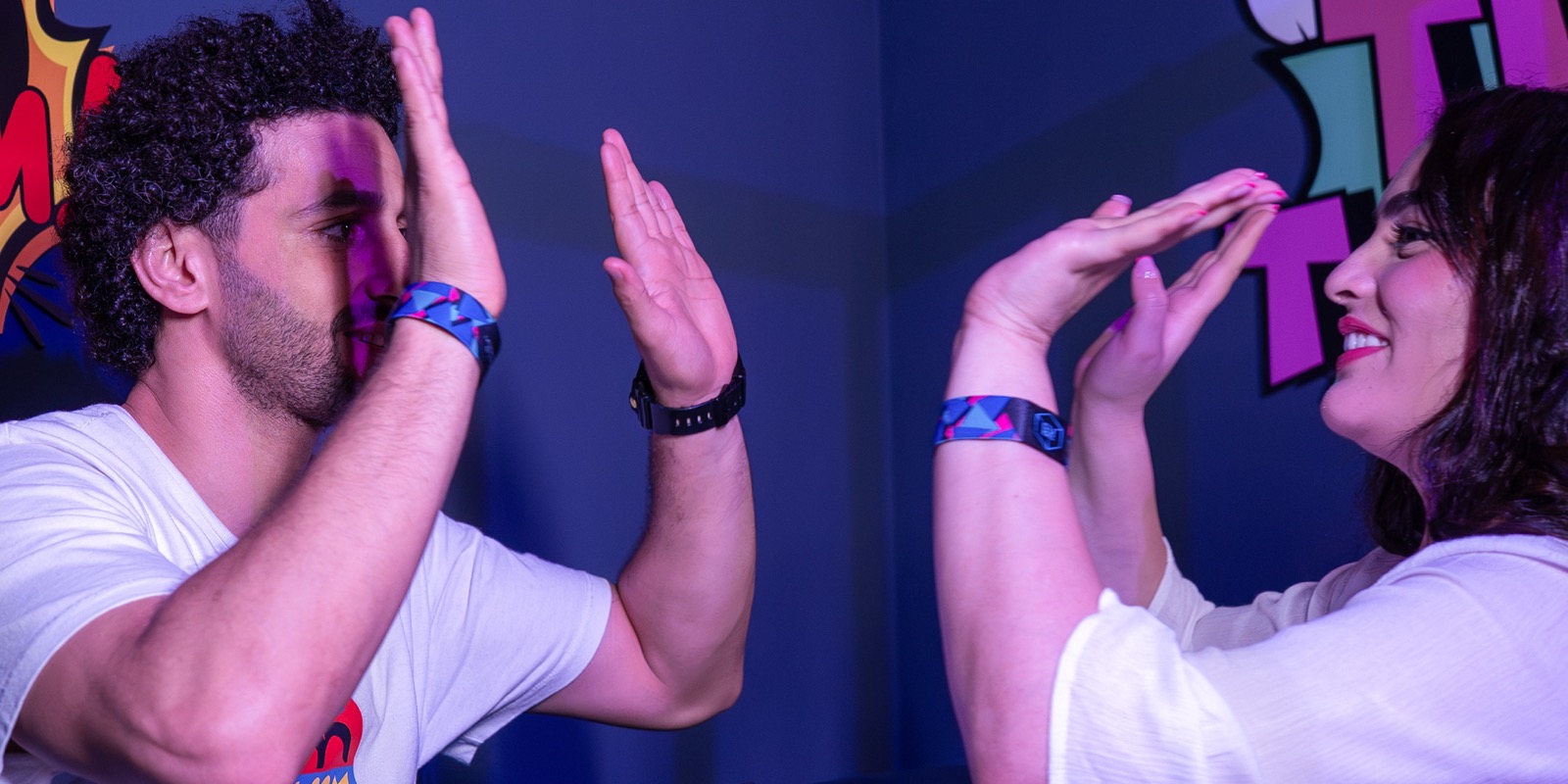
Rooms adults go back to
Across the thirty rooms:
- Laser Maze: through a web of beams without tripping the alarm.
- Bomb Squad: one calculation, done right, under a clock.
- Genius: arithmetic at speed, and the room decides who the genius is.
- Crazy Circuit: the steady-hand ring game, at room scale, with lives to lose.
- Red Ropes Area: through the black ropes without touching a red one, as fast as you can.
- Restricted Area: cross the floor without touching the restricted zones, or the alarm goes.
- Gym Tonic: strength, stamina and speed, for the one person in the group who asked for that.
- Worlderland: photos matched to countries on a world map, and the fastest way to find out who actually travels.
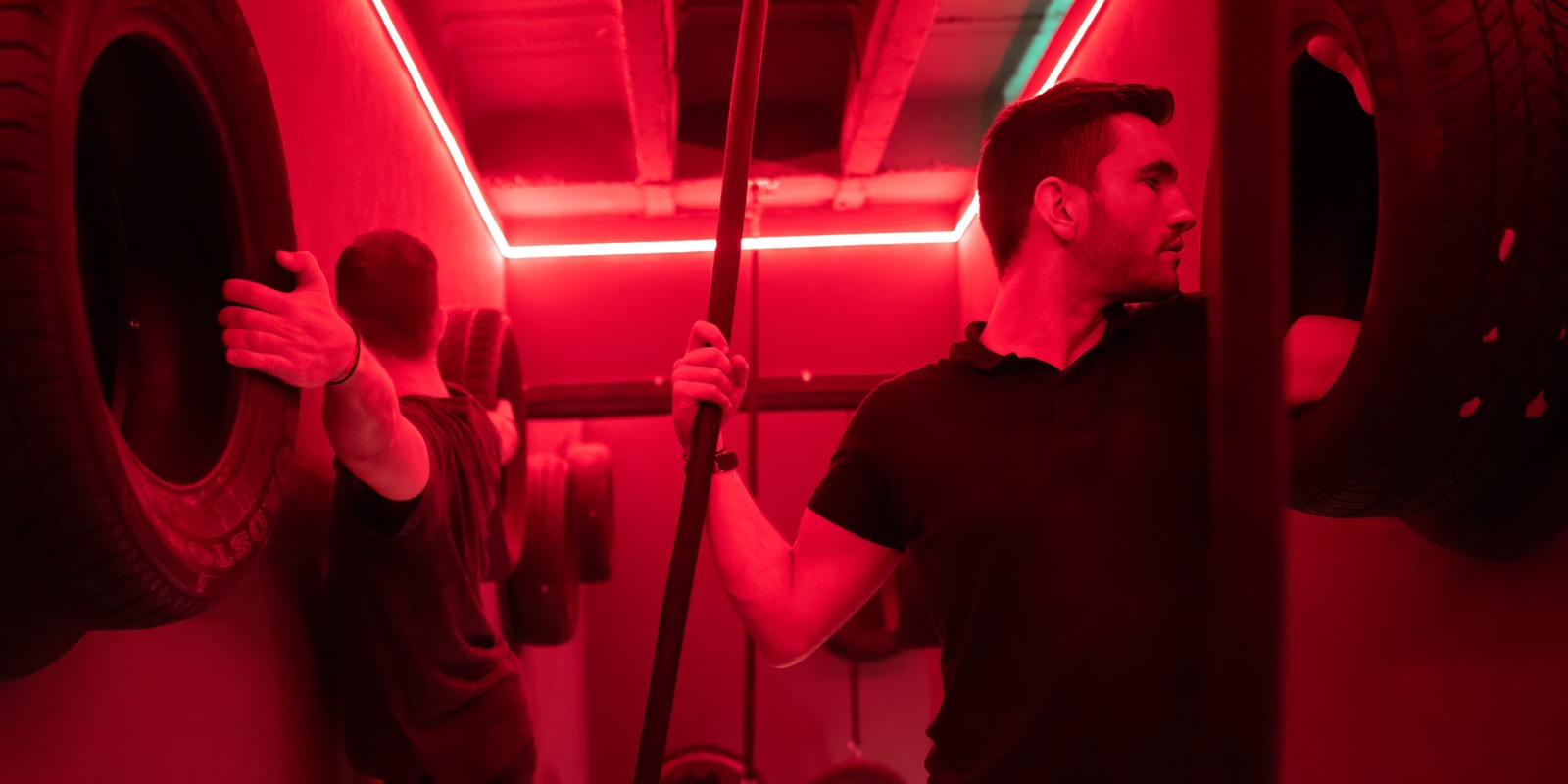
Rainy day, after work, winter evening
Everything is indoors, so a washed-out Saturday or a January evening is a normal session. Hours: Monday to Thursday 4pm to 10pm, Friday 4pm to midnight, Saturday 10am to midnight, Sunday 10am to 10pm. Weeknights from 4pm cover an after-work booking; Friday and Saturday until midnight cover a late one.
The price is the same every day of the week: $32.99 per person for 60 minutes or $38.99 for 90. There is no bar and no food service during a regular session, so the evening is usually dinner then CUBE, or CUBE then dinner.
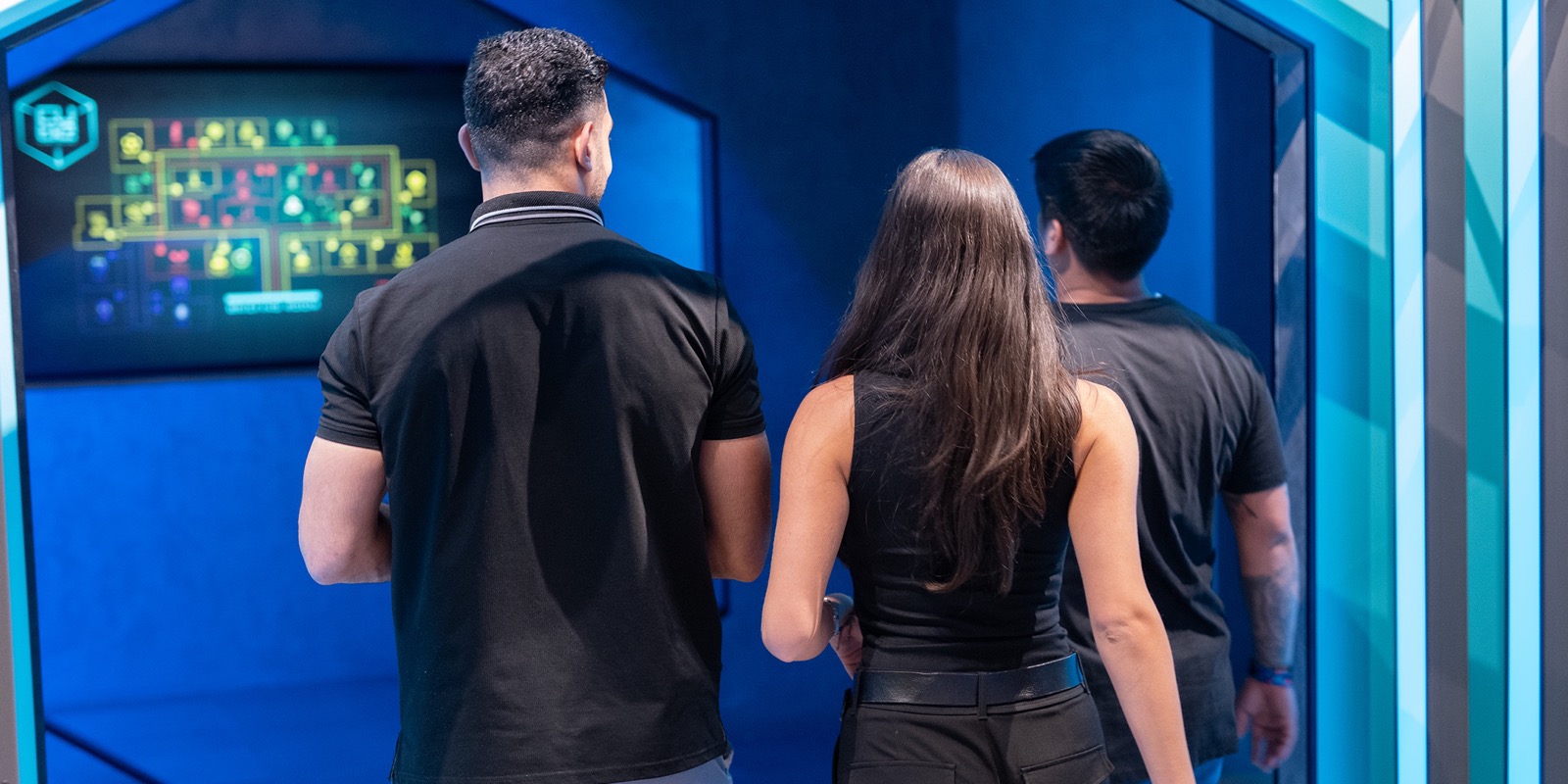
Couples and small groups
Two people is a complete team, which makes this a straightforward date night: the same rooms, one shared score, and a difficulty level you set together at every door. Three or four friends are one team. Seven or more split into teams and compete against each other on the leaderboard, which is usually the better format for a bigger group anyway.
When this is the wrong call
- If the evening is mainly about eating and drinking. There is no food service during a session.
- If the group wants to sit and catch up. This is an active session, not a lounge.
- If anyone in the group is under 7. They cannot take part.
Everything else, from a couple to a work team, is what the rooms are built for.
Before you book
- Wear comfortable clothes and running shoes. The Physical rooms involve climbing, balancing and moving quickly; the Brain and Skills rooms do not.
- Bringing teenagers? Players must be 7 or older, under-13s play with an adult, and anyone under 18 needs a waiver signed by a parent or guardian.
- Celebrating? Private bookings get an hour of play, then their own party area with a host. See events and parties.
- Where. 3185 Unity Dr, Unit 1, Mississauga, ON L5L 4L5. (647) 361-6700.
Book a session by choosing a date and a time. Bookings can be rescheduled with at least 24 hours' notice; the FAQ has the full terms.