What a family session looks like
Cube Challenges is a real-life gaming venue on Unity Drive in Mississauga: thirty challenge rooms, each one a short game you play as a team. A family of two to six is one team. Every player wears an RFID wristband, the team shares one score, and that score sits on a live leaderboard for the whole session.
You choose the order. Scan your wristbands at a room, pick one of three difficulty levels at the door, and the room unlocks. Clear the challenge and the room's points go on the team score. Miss it, and you can step out, scan back in and play it again. Nothing is locked behind anything else, so a seven-year-old and a parent can go from a climbing room to a memory game to a target game inside a few minutes.
There are no arcade cabinets, no tickets and no prizes, and it is not an escape room. Each room stands on its own, and a session is simply as many of them as your team takes on in 60 or 90 minutes.
Rooms that suit a family team
The thirty rooms are split into three categories, and most families end up mixing all three.
Physical
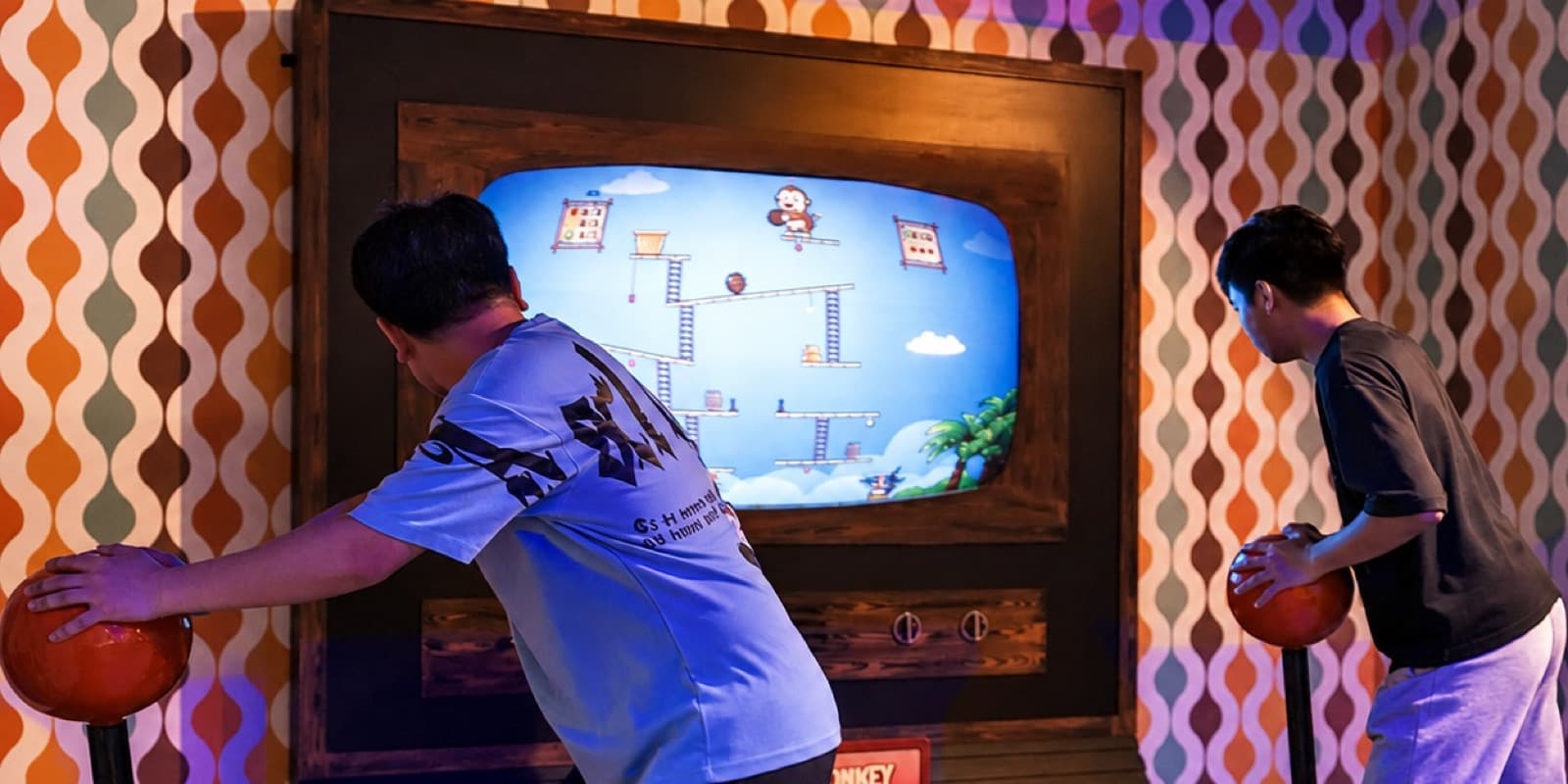
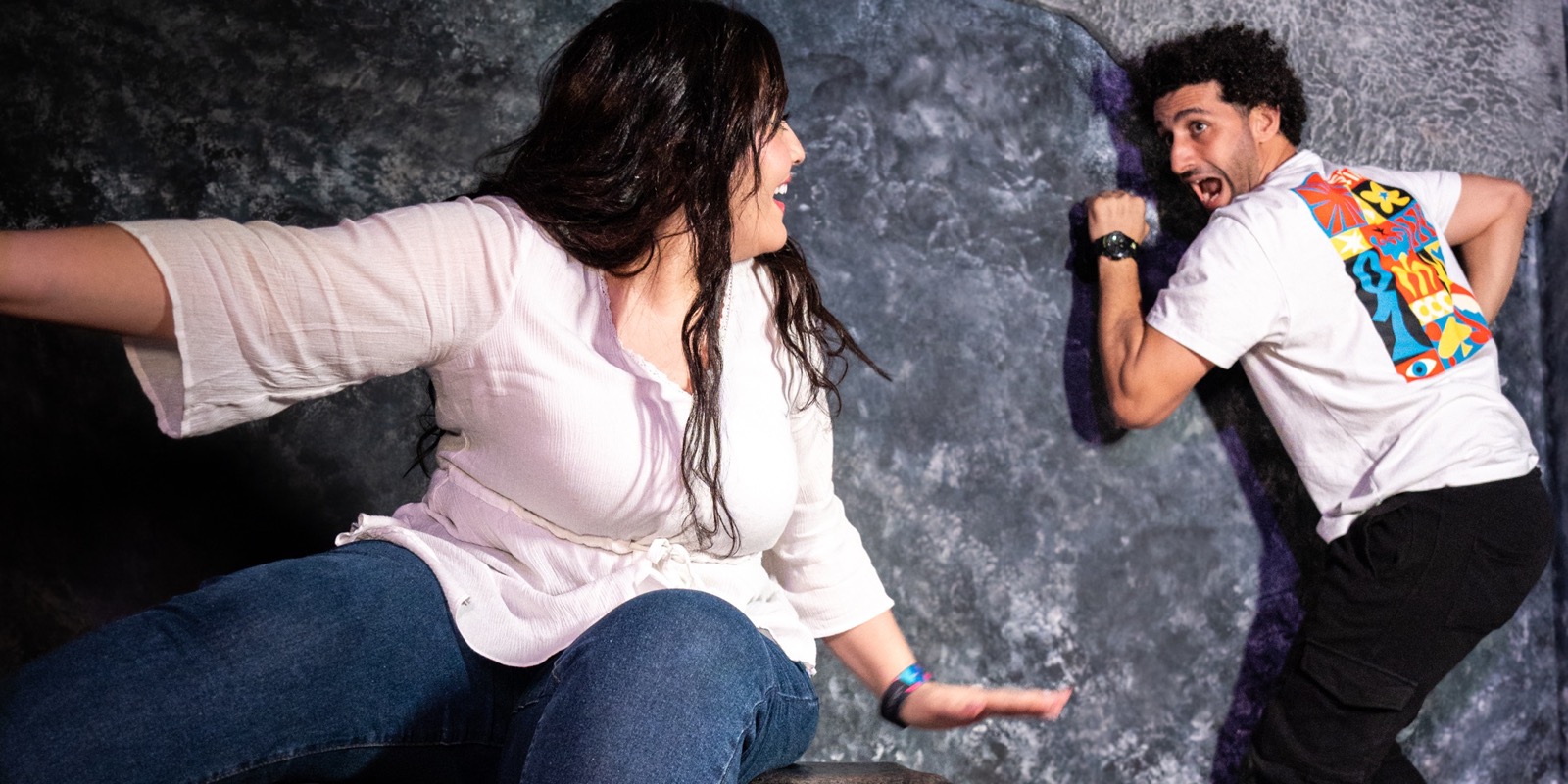
Ten rooms that ask you to move. In Cardio you cross the room on climbing handles without touching the red floor. Lava Land has you connecting paths on the screen while staying off the lava. Road to Olympus is a climb to the top before the clock runs out, and Laser Maze is a web of beams to get through without setting off the alarm.
Brain
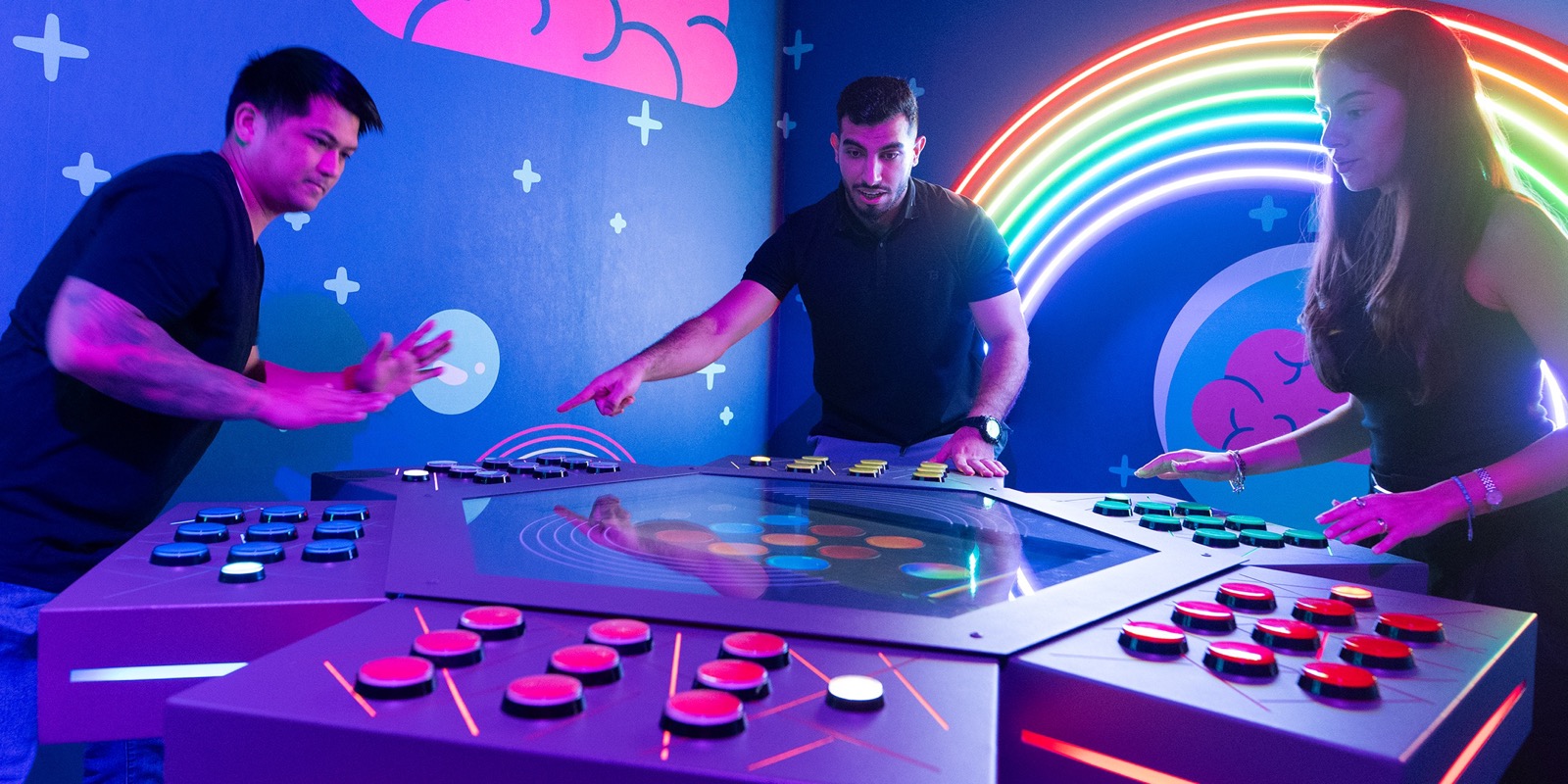
Seven rooms built around memory, pattern and quick decisions. Rainbow Mind seats each player at a colour station pressing the right combination of buttons. Worlderland matches photos to countries on a world map. Candit has you building the dessert shown on the screen of a candy shop, and All In is a race to push the correct cards on the walls before time runs out.
Skills
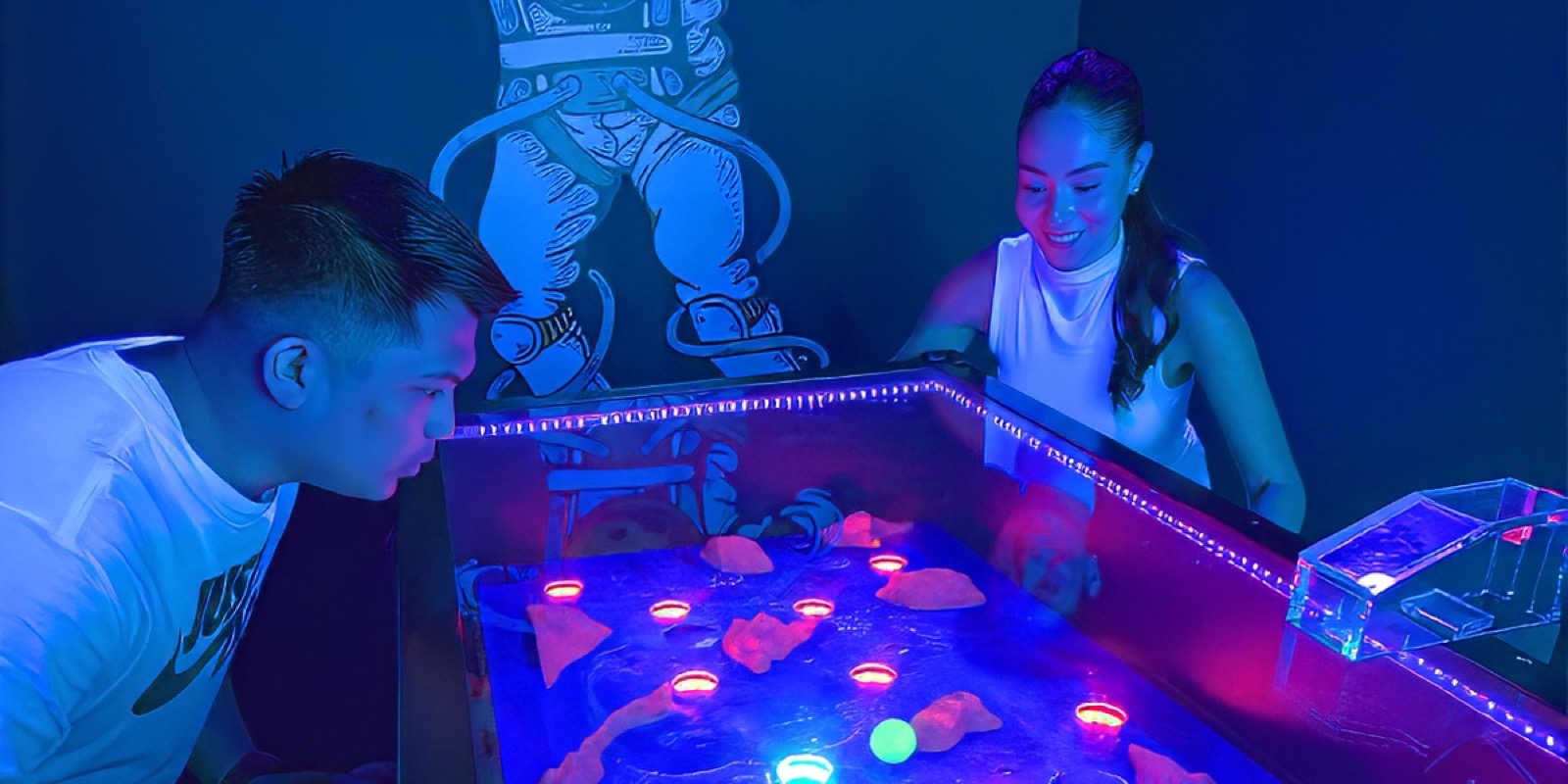
Thirteen rooms of aim, balance and timing. Color Twist puts hands and feet on the coloured floor wherever the wall tells you. Hangry Monkey has the team filling a basket with the fruit she asks for while dodging the barrels she throws. Crystal Maze tilts a playfield to roll a ball into the right hole, and Buzzer Beater is how many baskets you can score before the buzzer.
Every room has its three difficulty levels, so the same room works at level one for a younger player and at level three for the parent who wants a harder run. That one detail is what makes a mixed-age team fair.
Ages 7 to 12
Players aged 7 and up can play, and under-13s play on a team with an adult, so for this age group a parent is on the floor too rather than watching from a bench. Short rooms suit them: an attempt at Cardio or Hangry Monkey takes a few minutes, there is an immediate result, and the choice of what to try next is theirs. Start rooms on the first difficulty level, and let them call the next room.
Teens
Teenagers get the leaderboard. Thirteen and over can play without an adult on the team, and anyone under 18 needs a waiver signed by a parent or guardian. The pull for this age is the score: clearing a harder level in a room they have already beaten is the fastest way up, and replaying a room to beat their own run is part of the format, not a workaround. Friday and Saturday sessions run until midnight, so an evening booking works as well as a weekend afternoon.
Mixed ages, one team
A team can be a parent and a child, two parents and four kids, or grandparents and cousins: anything from two to six. Because difficulty is chosen room by room, the team never has to play at the level of its strongest member. Take a Brain room at level one so the youngest can lead it, then a Physical room at level three for the teenager, and every level cleared adds to the same team score.
Groups larger than six split into more teams, and those teams compete against each other on the leaderboard. For a family gathering, that is usually the better format anyway.
Rainy days, PA days and winter
Everything is indoors, so the plan does not change with the weather. Weekday sessions run from 4pm (Monday to Thursday until 10pm, Friday until midnight), Saturday from 10am to midnight and Sunday from 10am to 10pm. A weekend morning is the natural slot for younger kids. On a PA day or over March break, weekday sessions start at 4pm, and earlier daytime slots are available for group bookings on request.
Prices and how to book
Sessions are priced per person, and the price is the same every day of the week: $32.99 for 60 minutes or $38.99 for 90 minutes. Both give the team all thirty rooms. Sixty minutes suits a first visit with younger kids; ninety gives a team the time to go back to the rooms it liked and push the difficulty up.
Book online by choosing a date and a time. Anyone under 18 needs a waiver signed by a parent or guardian, which is quicker done before you arrive. Bookings can be rescheduled with at least 24 hours' notice; the FAQ has the full booking terms.
Birthdays and bigger family groups
A regular session is play only. For a birthday, or a family gathering with a party afterwards, book a private event instead: an hour of play followed by time in your own party area, with a host to run it. Bring your own food and cake, or ask about catering when you request a quote. Earlier opening times can be arranged for groups. See events and parties, or request a quote.
Before you arrive
- Wear comfortable clothes and running shoes. The Physical rooms involve climbing, balancing and moving quickly.
- Watch the briefing video with the kids. It covers the rules and the safety guidelines, and means less time on instructions when you arrive.
- Sign the waiver for anyone under 18 before you come.
- Eat before or after. There is no food service during a regular session.
- Find us at 3185 Unity Dr, Unit 1, Mississauga, ON L5L 4L5, or call (647) 361-6700.