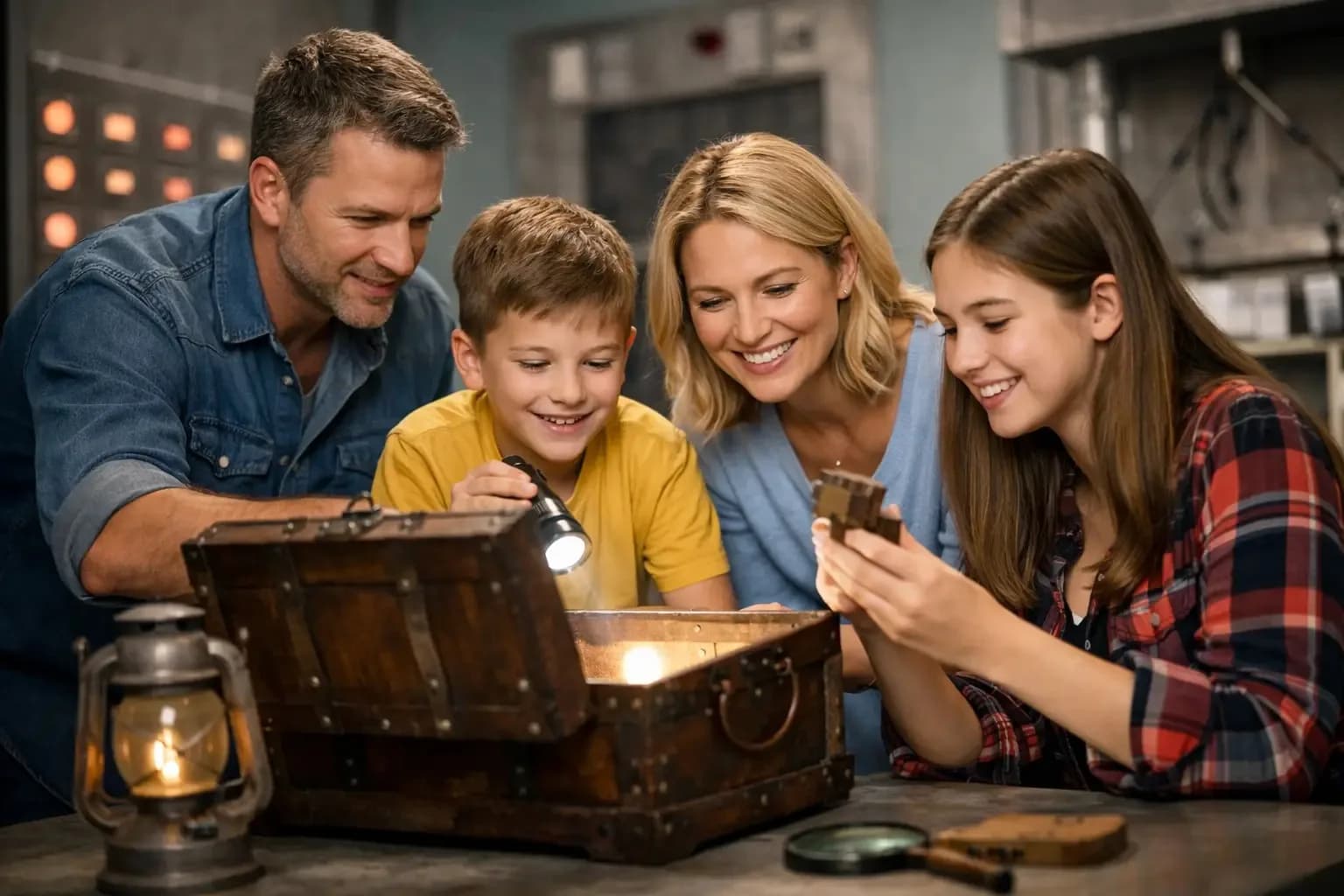

A seven-year-old wants to move. A teenager wants a real challenge. Parents want an activity that does not leave them standing on the sidelines. That is the test for great games for mixed age groups: everyone needs a genuine way to contribute, not just a turn to watch.
The best group games do not pretend every player has the same speed, strength, confidence, or attention span. They build in different routes to a win. One person notices a pattern. Another keeps the team calm. Someone else makes the quick catch, remembers the sequence, or calls the next move. When those strengths matter, age becomes part of the team's advantage.
What Makes Mixed-Age Games Actually Work?
A game can be simple without being easy. That distinction matters when you are bringing together children, teens, adults, grandparents, classmates, or colleagues. Rules should be clear within a minute or two, while the challenge should leave room for smart decisions, practice, and a little pressure.
The strongest options also keep rounds short. A five-minute challenge is easier for younger players to stay engaged with, and it gives competitive adults a reason to reset, improve, and go again. Long games can work for a quiet family night, but they are riskier for a birthday party, a school group, or an active weekend outing.
Look for games with adjustable difficulty, shared goals, and visible progress. A timer, score, level, or target gives the group something to chase together. It also prevents the loudest or most experienced player from taking over every decision.
12 Games for Mixed Age Groups to Try
1. Relay Puzzle Race
Set up a simple puzzle, word scramble, matching task, or picture sequence at one end of the room. Players take turns travelling to the station, solving one piece, then tagging the next teammate. The movement keeps energy high, while the puzzle gives less athletic players a meaningful role.
Make it fair by letting teams choose how to divide jobs. One player may run, another may spot matching pieces, and another may organize the final answer.
2. Cup Stack and Build Challenge
Give each team cups, blocks, or lightweight building pieces and a target structure to copy. The challenge is not just speed. It is communication, steady hands, and figuring out who should build which section.
This works well for families because younger kids can place pieces while older players handle planning. Add a time limit only after everyone understands the goal. A frantic first round can be funny, but a second round is where teams start to improve.
3. Human Bingo
Create bingo squares with prompts such as "has a pet," "can speak more than one language," "plays a sport," or "has travelled outside Ontario." Players must talk to others to fill their cards.
This is a smart opener for workplace teams, school groups, and large celebrations where not everyone knows each other. Keep prompts light and optional. The point is to start conversations, not put anyone on the spot.
4. Memory Trail
Place symbols, colours, or objects in a sequence that players can view for a few seconds. Then cover the sequence and ask teams to recreate it. Increase the number of items each round.
Memory Trail rewards observation rather than physical power. It is a strong balance for a group that includes athletes, puzzle lovers, and younger children. Give each team a chance to discuss a memory strategy before trying again.
5. Target Toss With Team Rules
Beanbags, soft balls, or rolled socks are enough to create a target toss game. The twist is that every player has to score before the team can claim the round, or the total score must reach a target within a set number of throws.
This stops one strong thrower from carrying the whole team. Players can coach each other on aim and choose throwing distances that suit their confidence. For mixed abilities, a closer line is not a shortcut. It is how everyone stays in the game.
6. Silent Line-Up
Ask the group to line up by birthday month, height, shoe size, or number of siblings without speaking. It sounds easy until the gestures start flying and somebody realizes they have misunderstood the category.
Use this as a fast reset between bigger activities. It needs almost no equipment, gets everyone standing, and makes communication the real challenge. Avoid personal categories that may make guests uncomfortable.
7. Mystery Object Match
Put familiar objects in bags or boxes so players can identify them by touch. Teams earn points for correct answers, then get a bonus point if they can explain their reasoning.
This is a useful lower-impact option when the group needs a breather from running and jumping. It still creates suspense, quick opinions, and plenty of opportunities for a younger player to surprise the adults.
8. Floor Is Lava Strategy Course
Use mats, paper squares, hoops, or safe markers to create a route across a room. The whole team must cross without touching the floor, using only the equipment provided.
This game needs sensible setup. Keep heights low, surfaces stable, and rules suited to the players in front of you. The best version is not the hardest physical course. It is the one that forces the team to plan, share space, and adjust when the first plan fails.
9. Fast-Hands Reaction Round
Choose a simple reaction task: catch a dropped ruler, tap a light or colour when called, sort cards by symbol, or grab the correct object from a central pile. Run short head-to-head rounds, then add scores together for the team total.
Quick rounds give teens and competitive adults a chance to push the pace without excluding everyone else. Alternate reaction tasks with thinking tasks so the event does not become a test of one skill.
10. Photo Clue Hunt
Give each team a set of photo clues showing close-ups of items, signs, textures, or landmarks around a safe venue. They must find each location and complete a small task before moving on.
A clue hunt is especially effective for birthday groups and family outings because people can split observation duties. One player recognizes the location, another reads the instructions, and another keeps track of what has already been found. Establish clear boundaries before the clock starts.
11. Collaborative Code Break
Present a short code made from shapes, colours, numbers, or simple substitution clues. Scatter the information among teammates so no one player has everything needed to solve it.
This format turns problem-solving into a group sport. The key is making the code accessible enough that children can spot patterns, while still giving adults and experienced puzzlers something to debate. If a team is stuck, offer a hint with a small time penalty instead of letting the game stall.
12. Beat Your Score Circuit
Create a circuit of short stations: a target toss, a memory test, a balance task, a pattern puzzle, and a coordination challenge. Teams choose their order, collect points at every station, and may replay a challenge to improve their score.
This is where mixed-age groups really come alive. Players can lead at different stations, and nobody is trapped in a single activity that does not suit them. At Cube Challenges, that open-circuit approach is built into a real-life gaming experience, with varied rooms and difficulty levels that let teams find their strengths and chase a higher score.
How to Keep Competition Fun for Everyone
Competition works when it gives the group a shared target, not when it turns one missed throw into a disaster. Score teams rather than individuals whenever possible. Celebrate a smart recovery, a great bit of encouragement, or a player attempting something outside their comfort zone.
Difficulty choice matters too. If younger players are involved, give teams an easy first round to learn the mechanics, then let them decide whether to raise the stakes. Competitive groups may want the hard setting immediately. Families often have more fun building confidence first.
It also helps to mix challenge types throughout the session. Follow a physical game with a brain game. Put a quick reaction task after a slower collaboration round. That rhythm gives every player a moment to shine and keeps the energy from dropping.
Choose the Right Game for Your Group
For a family with younger children, prioritize clear rules, short rounds, and tasks that reward teamwork over raw speed. For teens and friend groups, lean into scoreboards, replay opportunities, and a little friendly bragging. For workplace teams, choose games that reveal communication and planning styles without making anyone feel exposed.
If your group includes a wide range of mobility or confidence levels, ask one practical question before choosing an activity: can every person contribute to the result? A good answer may mean offering seated roles, changing throwing distances, reducing a movement requirement, or pairing a physical task with a mental one. Inclusion is not a softer version of the game. It makes the win more satisfying because the whole team earned it.
Pick a challenge, set the clock, and let every player bring something to the score. The team that listens, adapts, and keeps trying usually has the most fun - and often ends up on top. Book your session at cubechallenges.ca and give every age in your group a room where they can lead.