
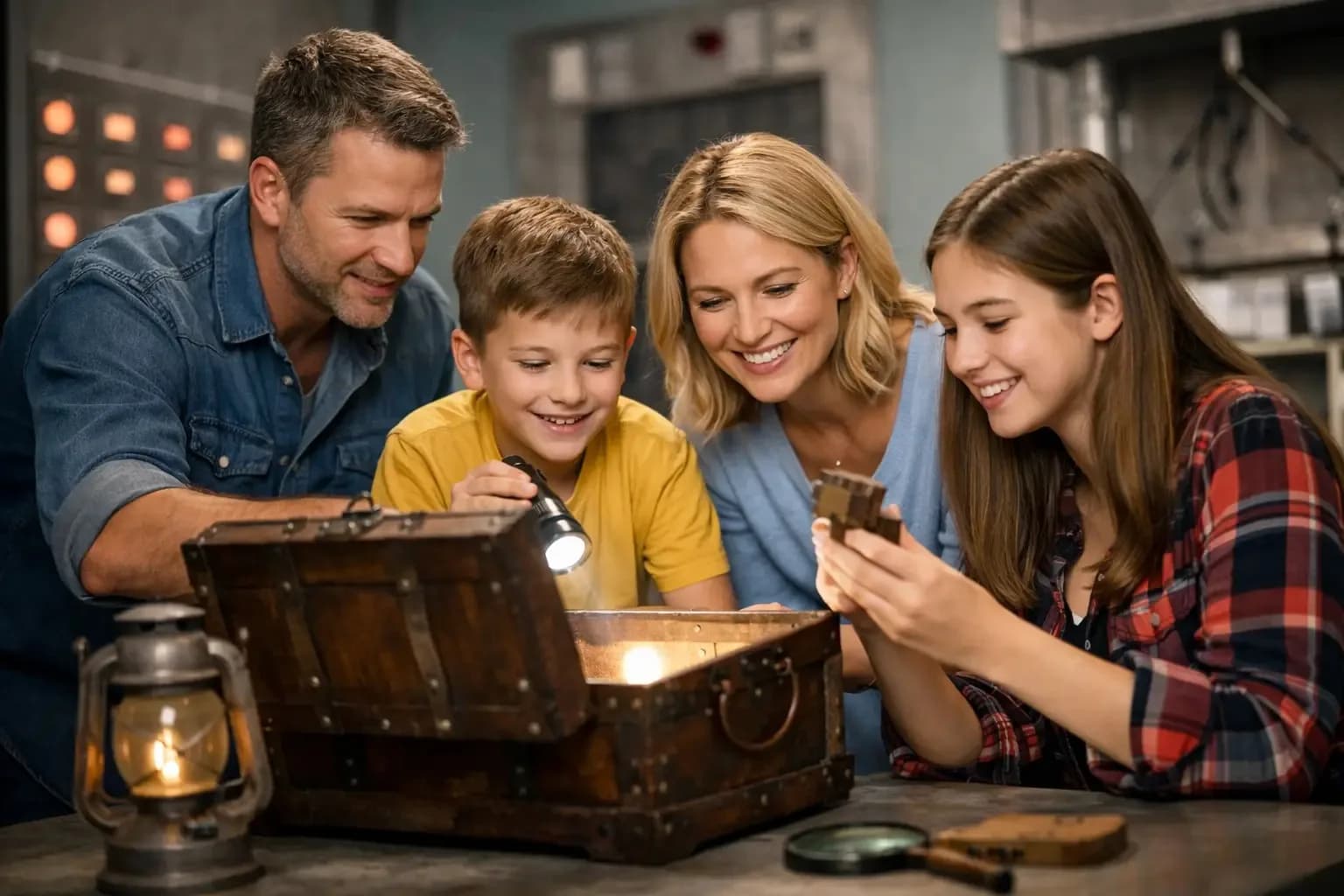
A rainy Saturday can turn into a real team showdown when everyone has a role to play. Family friendly challenge rooms give kids, teens, parents, and even the most competitive uncle a chance to move, think fast, communicate, and chase points together. This is not a sit-back-and-watch activity. It is your team versus the clock, the room, and maybe each other’s high score.
For families looking for more than a movie or another trip to the arcade, challenge rooms bring physical games, brain teasers, agility tests, and quick decisions into one shared experience. The best part? A strong team is not always the fastest or the fittest. It is the team that notices the details, listens well, and knows when to switch tactics.
What Makes Family Friendly Challenge Rooms Different?
Traditional escape rooms usually send your group through one story in one locked space. You solve a sequence of clues, hope to reach the ending before time runs out, and often move at the pace of the strongest puzzle solver in the group.
Family friendly challenge rooms work differently. Instead of one long mission, your team takes on a circuit of short, individual games. Each room asks for a different skill: balance, memory, speed, coordination, perception, logic, or nerve. Complete a room, earn points, then choose your next challenge.
That open format makes a major difference for families. If one game is not your team’s strength, you are not stuck. Move on, try another room, and come back later with a better plan. It keeps the pace high and gives every player a genuine chance to contribute.
Short challenges keep everyone engaged
A long puzzle can be rewarding, but younger players may lose focus if they are waiting for adults to decode a complicated clue. Shorter, varied rooms create more reset moments. One minute you may be coordinating a physical task; the next, spotting a pattern or responding to a flashing sequence.
That variety also helps groups with broad age ranges. A seven-year-old may notice something adults overlook. A teen may take the lead on a reflex-based game. A parent may be the calm voice that gets the team organized when the timer starts ticking down. Every win feels shared because every player can bring a different strength.
Difficulty levels make the competition fairer
The right activity should stretch a team without shutting anyone out. Rooms with multiple difficulty levels let families decide how intense they want the experience to be. Start with a manageable level to learn the mechanics, then raise the stakes when your team is ready.
This flexibility matters when you are bringing first-time players, younger children, or relatives with different confidence levels. You can keep things light and playful, or you can go all-in and chase a score worth bragging about at dinner. Are you ready to see what your team can do?
Build a Better Team Before You Enter
The teams that score well are rarely the ones that simply rush in first. They are the ones that communicate clearly and adjust quickly. Before the first room, take a minute to decide how your group will work together.
If you have two to six players, give everyone permission to speak up. One person can watch for instructions, another can track the timer, and others can focus on the task itself. Those roles do not need to stay fixed. Switching jobs after each room keeps the experience fresh and gives quieter players a chance to lead.
Parents can help by resisting the urge to take over. It is tempting to solve the problem for everyone, especially when the clock is running. But a better family memory comes from letting kids suggest the move, test the idea, and celebrate when it works. If the plan fails, reset fast. There is another room waiting.
A little friendly competition can add energy too. Challenge the adults versus the kids on one room, then combine forces for the next. Just keep the bigger goal in view: earn points together and make sure nobody spends the session standing on the sidelines.
Choose the Session That Fits Your Family
Session length changes the feel of the outing. A 60-minute discovery session is a strong choice for first-time groups, younger players, or families fitting an activity between lunch and another plan. It gives you time to understand the format, try several challenge types, and discover what your team does best.
A 90-minute full session gives competitive families more room to experiment, replay favourite games, and push for a bigger score. It is especially good for teens, larger family groups, or anyone who knows a quick hour will not be enough once the leaderboard mentality kicks in.
There is no wrong choice. It depends on your group’s attention span, energy level, and whether your team sees one great score and immediately says, one more try. At Cube Challenges in Mississauga, the open circuit format means you can choose the order of rooms, revisit games, and build your session around the challenges your team enjoys most.
How to Prepare for Challenge Room Success
No special athletic ability is required, but practical preparation helps your team focus on the fun. Wear comfortable clothing that lets you move, bend, reach, and react quickly. Closed-toe shoes are a smart choice for an active indoor experience.
Arrive with enough time to check in, complete any required waiver, hear the rules, and get your team ready. Rushing through the start can make the first few rooms feel more confusing than they need to be. Once you know how scoring and room access work, the fun becomes much more strategic.
Families should also set expectations before they play. Explain that some rooms will feel easy and others will demand a few attempts. That is part of the game. A missed target, a wrong button, or an imperfect run is not a reason to quit. It is information. Talk about what happened, change one thing, and go again.
Bring the right attitude toward points as well. Scores make the experience exciting, but they should not turn one mistake into an argument. The best teams celebrate clever attempts, good communication, and individual breakthroughs, not only the final number on the board.
Make the Day Feel Bigger Than One Game
Challenge rooms work well as the main event for a birthday, a weekend outing, a school break plan, or a family get-together with relatives visiting the GTA. Because each room is different, the conversation keeps going after the session ends. Someone will still be talking about the near-perfect run, the room nobody expected to be difficult, or the split-second decision that changed the score.
For a birthday group, let the guest of honour choose the first room. For a family reunion, mix generations into teams so cousins and grandparents can work together. For teens, make a friendly wager where the losing team handles snack duty afterward. Small details turn a great activity into a story your group will repeat.
If your family includes players with very different confidence levels, avoid framing the day as a test. Treat it as a chance to try new things. The player who is unsure about a physical challenge may shine in a memory game. The person who says they are not a puzzle person may become the reason the team spots the answer.
The Real Win Is Seeing Everyone Contribute
A great family activity gives people something to do, not just something to watch. Challenge rooms create those moments when a child takes a risk, a parent changes strategy, a sibling offers the missing idea, and the whole team reacts at once when the score climbs.
Pick a session that suits your group, wear clothes you can move in, and leave space for a few retries. Then step into the first room with one simple goal: give every player a chance to help your team become the best version of itself.
Ready to turn your next family outing into a team showdown? Book your session at Cube Challenges in Mississauga and see what your family can do together at cubechallenges.ca.