
Most indoor team-building games fail for reasons that have nothing to do with the game. They fail because two people play and eight watch. They fail because the activity rewards one narrow ability and everyone else spends the afternoon being visibly bad at it. Or they fail because the "team building" part is a facilitator explaining the metaphor afterwards.
This article is about what to look for instead, and how a real-life challenge format at Cube Challenges in Mississauga handles the specific problems a work group brings with it.
Four Tests Any Team Activity Should Pass
- Is anyone ever standing still? If the format has queues or turns, half your group is watching for half the time. That is the single most common failure.
- Can someone be bad at it in public? Anything that exposes one skill will humiliate somebody. It needs several routes to being useful.
- Does it survive mixed fitness and mixed ages? Most work groups span thirty years and every fitness level. An activity that assumes otherwise excludes people.
- Does it end cleanly? A fixed session with a defined finish beats an open-ended afternoon nobody knows how to leave.
Run the usual suggestions through those four and most of them fall over on the first or the third.
How the Format Answers Them
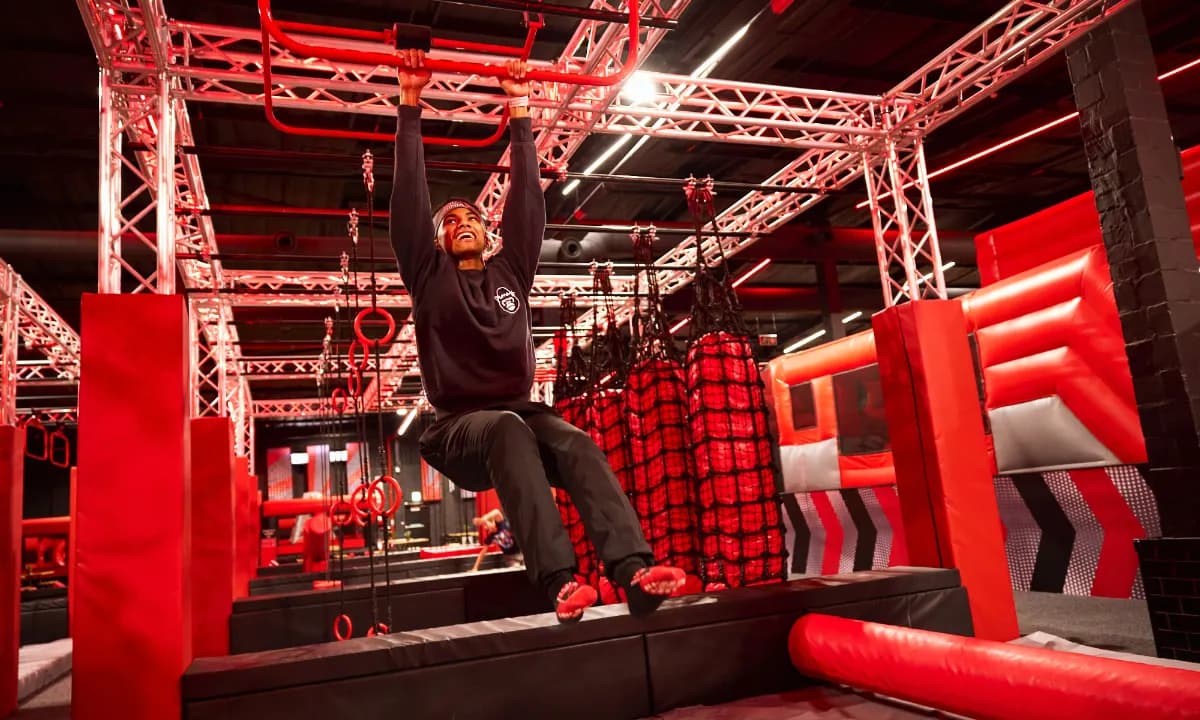
Cube Challenges is 30 individual challenge rooms rather than one game. Teams of 2 to 6 move between them freely for a 60- or 90-minute session, in any order, retrying as often as the clock allows. Everyone wears an RFID wristband and every attempt feeds one shared team score.
Against the four tests:
- No queues. Six people can be in six different rooms simultaneously. There is no turn to wait for.
- Three categories. Physical, Brain and Skills — 10, 7 and 13 rooms respectively. Nobody is stuck being measured on one ability.
- Three difficulty levels per room. The same room is a fair fight for different people at different levels, which is what makes mixed fitness workable.
- A fixed session. It starts, it runs, it ends, and there is a score at the end.
The shared score is the part that does the actual team-building work. It is cooperative within a team, so the useful behaviour is not winning — it is noticing who should attempt which room, and saying so.
What Actually Surfaces During a Session
You do not need a debrief to see this happen; it happens on the floor.
- Who allocates. Someone works out within ten minutes that the group should split up and starts directing traffic. It is very often not the most senior person in the room.
- Who communicates under a clock. The Brain rooms — Bomb Squad, Genius, Rainbow Mind — punish panic much more than they punish difficulty. Whoever stays calm and reads before acting becomes visible immediately.
- Who coaches. The most valuable person in a Physical room is usually the one standing outside it, because the route is obvious from there and invisible from inside.
- Who knows when to quit. Unlimited retries make stubbornness expensive. Groups that walk away from a room after three failures score better than groups that grind.
None of it needs interpreting. People see it themselves, which is worth more than a facilitator pointing it out.
Groups Bigger Than Six
A team is 2 to 6 people. A department of 24 is not a problem — it becomes four teams running at the same time in the same venue, each with its own shared score, and a leaderboard at the end.
That structure is worth thinking about before the day. A few things that make it work better:
- Mix the teams across departments. Putting the team that already works together on the same team wastes the exercise.
- Split seniority evenly. One manager per team, not a managers' team.
- Keep them even in size. A team of 4 against a team of 6 is not a fair leaderboard.
Larger and private bookings are quoted individually — send your group size, preferred date and session length and request a quote. Earlier weekday slots before the usual 4pm opening can often be arranged for corporate groups, which is the practical answer for a session that has to happen inside working hours. See events and team building for the formats.
Planning the Session Itself
- Book 90 minutes ($38.99 per person), not 60 ($32.99). The first 20 minutes go on figuring out the venue. For a work group, cutting the session before the competitive part starts is a false economy — and pricing is the same every day of the week, so there is no weekday saving to chase either.
- Tell people the dress code in advance. Clothes they can move in, closed shoes. Someone will otherwise arrive in office wear and sit out the Physical rooms.
- Send the briefing video round beforehand. It covers the rules and safety, and it means less time spent on instructions when you arrive.
- Plan food separately. There is no walk-in food or drink service. Catering can be arranged as part of a private booking — raise it while you are getting the quote, not on the day.
- Do the social part after. A 90-minute session then dinner works. The other order does not.
What It Is Not
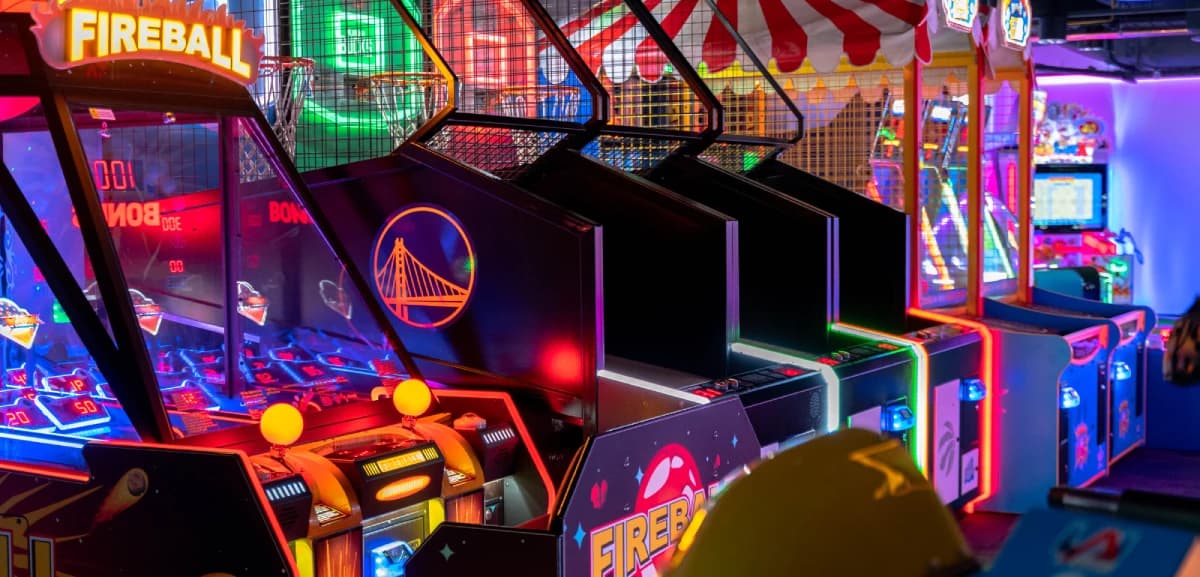
Worth setting expectations before you sell it internally. This is not an escape room — there is no single puzzle and no hour-long room. There are no arcade machines, no tickets and no prizes. There is no facilitator running a workshop, and no debrief session built in; if your group needs structured reflection afterwards, you run that yourselves.
What it is: 30 rooms, a clock, and one score per team.
Frequently Asked Questions
How big a group can you take?
Larger groups split into teams of up to 6 running at the same time. Send your numbers and date and it will be quoted individually.
Can we run it during the working day?
Standard opening is 4pm on weekdays, but earlier daytime slots can be opened for group bookings on request.
What about people who cannot or would rather not do the physical rooms?
20 of the 30 rooms are Brain or Skills. A team can score well while barely touching the Physical category, and difficulty levels let people pick their own bar.
Is it competitive or cooperative?
Both, deliberately. Within a team it is cooperative — one shared score. Between teams it is competitive.
Do you cater?
For private and group bookings only, arranged as part of the package. There is no walk-in food or drink service.
Is it suitable for a school group?
Yes — the minimum age is 7, and anyone under 18 needs a waiver signed by a parent or guardian.
The Short Version
The best indoor team-building games are the ones where nobody waits, nobody is exposed on a single skill, and the group has one target rather than a bracket. Thirty rooms across three categories with three difficulty levels each covers the first two; a shared team score covers the third.
See the 30 rooms, or request a quote for your group.