The Thing Nobody Tells You Before You Book
Most pages that answer "arcade games near me" tell you a venue is exciting, immersive and fun. None of them tell you what the first ten minutes are like, whether you will be standing in a queue, or what you are supposed to do when you walk through the door.
So this is a walkthrough of a real session at Cube Challenges in Mississauga, in order, from arriving to the final score. If you have never done a real-life challenge venue before, this is the article that tells you what you are actually buying.
First, What It Is
Thirty individual challenge rooms across three categories — Physical, Brain and Skills. Your team of 2 to 6 books a 60- or 90-minute session, and all 30 rooms are open to you for the whole of it, in any order you like.
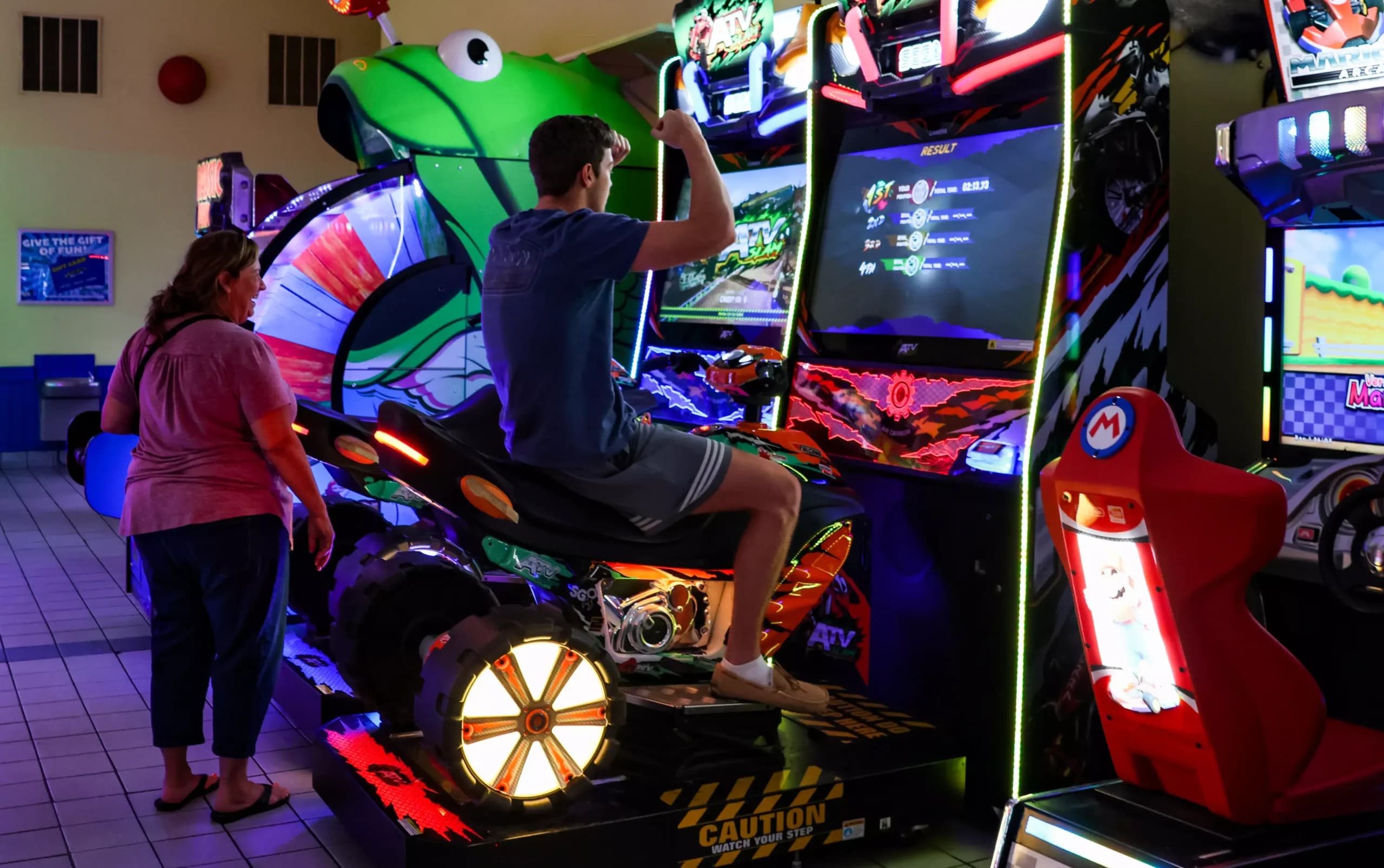
There are no arcade cabinets, no screens to play, no tokens and no prize counter. Every challenge is a physical room you walk into. It is arcade-shaped in the sense that matters — short games, instant results, a score to chase — and not in the sense of machinery.
Before You Arrive
- Book a slot. Sessions run on timed slots and weekend evenings go first. Check live availability.
- Sort waivers. Anyone under 18 needs one signed by a parent or guardian. Do it in advance and you will not be doing paperwork on the clock.
- Watch the briefing video. Ten minutes, covers the rules and safety, and means less standing around being instructed when you get there.
- Dress for it. Clothes you can move in and closed running shoes. Ten of the 30 rooms involve climbing, balancing or sprinting.
- Eat afterwards. There is no walk-in food or drink service, and a full stomach before the Physical rooms is a mistake either way.
Minutes 0–5: Wristbands
Everyone gets an RFID wristband. That wristband is the whole scoring system — you tap in at a room, play it, and the result goes automatically to one shared team score. There is nothing to write down and no scorekeeper.
Worth understanding right now, because it changes how you play: the score is shared, not individual. You are not competing with the people you came with. Everything anyone earns lands in the same total.
Minutes 5–15: Split Up Immediately
This is where most first-time groups lose the most points, and it is entirely avoidable. Six people walking around together looking for a good room to start with is six people scoring nothing.
Split into pairs and go to different categories. Play the easiest difficulty first in each new room — every room has three levels, and the first clear is really about finding out whether the room suits you. You are gathering information, not points.
There is no queue and no schedule. Six people can be in six different rooms at the same moment, which is the single biggest practical difference between this and a room full of cabinets.
Minutes 15–60: Play to Your Strengths
By now you know roughly what your group is good at. Stop exploring and start converting — go back to your strong rooms and push them to higher difficulty levels, because clearing a harder level is worth more and you already know the mechanics.
Physical rooms (10)
Lava Land, Laser Maze, Cardio, Road To Olympus, Red Ropes Area, Speed Barrels. Climbing, balance and precision. The consistent failure mode here is hurrying — people fall because they rushed, not because they were not strong enough.
Brain rooms (7)
Bomb Squad (arithmetic where a mistake detonates), Genius (harder and faster), Clef De Sol (musical memory), Worlderland (world geography), Rainbow Mind (colour and pattern recall). Read for a couple of seconds before acting — these punish a fast wrong answer far more than a slow right one.
Skills rooms (13)
Buzzer Beater, Hitball, Crystal Maze, Shooting Farm, Slingshot Madness, Target 8, Subbuteo. Aim and timing. These are the best value for retries — your third attempt is genuinely better than your first.
See all 30 rooms if you would rather plan a route in advance.
On Retries: Unlimited Is Not Infinite
You can retry any room as often as you like while the clock runs. That sounds like permission to grind, and it is the second most common way groups lose points.
A workable rule is three attempts. If you have failed a room three times and you are not visibly getting closer, that room is now costing you two others you would clear first time. The exception is a room where each attempt is measurably better — getting further along, hitting more targets. "Nearly" is information. "No idea what went wrong" is not.
The Last Ten Minutes
- Stop trying new rooms. A room you have never seen, with eight minutes left, is a coin flip.
- Go back to your two best rooms and push the difficulty.
- Close on a short Skills room, not a long Physical one — fast attempts, fast results.
And the honest expectation: nobody clears all 30 rooms in a session. The session is about which rooms you choose to attempt, not finishing a list.
60 or 90 Minutes?
Everything above assumes room for both a scouting phase and a scoring phase. In 60 minutes ($32.99 per person) those run together — cut the scouting to five minutes and commit early. In 90 minutes ($38.99) the walkthrough above happens comfortably.
Pricing is identical every day of the week, so there is no cheaper weekday to hold out for. The only decision is time.
If You Are More Than Six
A team is 2 to 6. Bigger groups split into several teams running at the same time, each with its own shared score and a comparison at the end — which is how most birthday, corporate and school bookings run. Those are quoted individually; send your group size and date to request a quote, and see events and parties for the formats.
Frequently Asked Questions
Are there real arcade machines?
No. No cabinets, no tokens, no tickets and no prize counter. Every challenge is a physical room.
Do we need to be good at video games?
No, and it would not help. Nothing here is played on a screen.
Is this an escape room?
No. An escape room is one room and one puzzle for an hour. This is 30 rooms you move between freely.
What if we are late?
The clock runs for the session, so arrive together and a few minutes early. Rescheduling is possible up to 24 hours beforehand; bookings themselves are final.
Can younger kids play?
From age 7, with an adult for under-13s. The three difficulty levels per room are what make mixed-age groups work.
Is there anything else to pay once we are inside?
No. The session price is the whole price — there is no card to load and nothing to top up.
The Short Version
Book a slot, wear shoes you can move in, split up the moment you get your wristband, spend ten minutes finding out what your group is good at, then spend the rest of the session farming those rooms at higher difficulty levels. That is the entire method.